Invasive Species

The Town of Pelham has a policy in place to protect the natural environment within the Municipal Boundary against the damage caused by invasive species. Below is information available about current threats and the steps the Town is taking, along with actions residents can take that will continue to preserve and enhance the quality of Pelham communities. 

What is an invasive species? Invasive species are plants, animals, insects, and pathogens that are introduced to an area and cause harm to the environment, economy, or society.

View the Town of Pelham Invasive Species Management Policy

Oak wilt is a vascular disease of oak trees, caused by the fungus Bretziella fagacearum.  The first known case in Canada was confirmed in in Niagara Falls, Ontario in May 2023.
Information about Spongy Moth,  Lymantria dispar dispar moth or "LDD Moth" (formerly known as gypsy moth), an invasive species that has caused forest defoliating in Pelham.
The Invasive Species Management Policy provides a framework to identify and address all invasive species through prevention, public awareness, detection, and control measures. 

Hemlock woolly adelgid (HWA) has recently been detected in Lincoln, Ontario.

As of October 2023, the affected areas in Ontario include Niagara Gorge, Fort Erie, Wainfleet, Pelham, Hamilton, Grafton, Haldimand County, and Lincoln.

Learn more about about Hemlock woolly adelgid from the Invasive Species Centre.

You can learn more about detections here.

In the spring of 2023 the Town of Pelham distributed the following information to residents in the urban canopy area regarding preventative methods to reduce the spread of Oak Wilt.

See a PDF here.

The information below is an excerpt taken from the Invasive Species Centre Oak Wilt Resources Page.

From the Invasive Species Centre Oak Wilt Resource page. 

In June, 2023 the Canadian Food Inspection Agency confirmed the presence of oak wilt (Bretziella fagacearum) in Springwater, Ontario, a township in Simcoe County near Barrie. This is the second known case of oak wilt in Canada.

As of May 2023 - Oak wilt has been found in a residential area in Niagara Falls, Ontario. This is the first confirmed detection of oak wilt in Canada. To help prevent the spread of this detection, movement restrictions are in place on affected properties. The Canadian Food Inspection Agency (CFIA) is working with other federal, provincial and municipal governments to survey the area and determine next steps. Report any potentially infected trees to OakWiltReportingOntario-Fletrissementduchene@inspection.gc.ca.

Oak wilt was named after the characteristic leave wilting observed on infected trees. Bretziella fagacearum spreads through the vascular system of oaks, restricting the movement of water and nutrients up towards the leaves. The leaves of infected oaks can start to wilt and drop prematurely, eventually resulting in complete defoliation.  

The leaves will begin turning brown at the outer edges first and will move in towards the middle margin. Leaf discolouration and wilting typically starts at the top of the canopy and moves down over time.  

The fungus Bretziella fagacearum develops sporulating mats between the sapwood and bark of dead red oak trees. These mats, called “pressure pads” by technicians, can vary in size, are generally produced in late fall or early spring, and remain visible for two or more weeks. They are usually observed on the trunk or large branches of the tree (CFIA, 2012). 

Preventing the spread of oak wilt is the best way to protect oak trees. There are a few different strategies that aid in the prevention of oak wilt:  

  • Don’t move firewood, as it may contain live fungal spores 
  • Don’t prune or damage oak trees between April and October, as this is the most vulnerable time for overland spore spread. If pruning must occur, paint a thin layer of wound paint or shellac on thewound immediately. Wounds caused by storms or other events should also be painted immediately 
  • Learn how to identify the signs of oak wilt 
  • Communicate with others about the potential threat 
  • Report summer leaf fall and sudden die off of oaks.

If you have found a suspect oak wilt, download and complete the following sampling protocols: 

Suspected sightings should be immediately reported to the CFIA  OakWiltReportingOntario-Fletrissementduchene@inspection.gc.ca

CFIA will dispatch a technician to aid in your survey and take the sample directly. 

Learn more at the Invasive Species Centre Oak Wilt Page

The spotted lanternfly is an colourful insect native to Asia, and has been recognised as a potential threat to the grape, fruit tree and forestry industries in Canada. With its unique colouration the spotted laternfly is easily identified in relation to other native insects.

First detected in Pennsylvania in September 2014, it is not known to exist in Canada, spotted lanternfly was added to the regulated pest list in 2018 in an effort to prevent the introduction from infested areas.

The spotted lanternfly is primarily considered an agricultural pest, however it could have widespread ecological impacts as the species can utilize a broad range of plant feeding hosts, including hardwood trees.  

If you believe you have found suspect spotted lanternfly specimens, please contact the Canadian Food Inspection Agency (CFIA).

Learn more at the Invasive Species Centre Spotted Lanternfly Page

Spongy Moth - LDD Lymantria dispar dispar Moth

Information about Spongy Moth, Lymantria dispar dispar moth or "LDD Moth" (formerly known as gypsy moth), an invasive species causing forest defoliating in the Pelham area.

Learn More About Spongy Moth

What is a Spongy Moth?

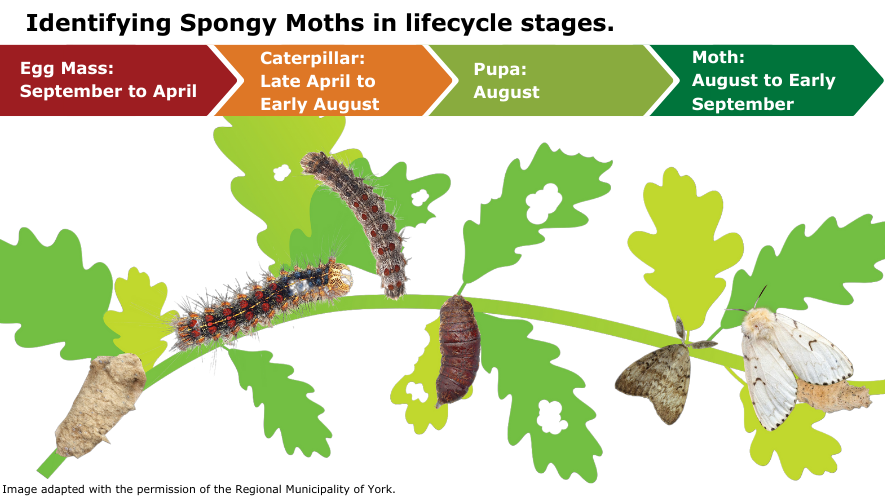
Spongy Moth (Lymantria dispar) previously known as the Gypsy moth (EGM) is an invasive insect from Europe and Asia that established in North America in the late 1860’s near Boston. Spongy Moth caterpillars are 5 to 60 millimetres in length, dark and hairy, with five pairs of blue dots and six pairs of red dots on the back. They feed on a wide range of coniferous as well as deciduous trees, but show a preference to oak trees.

History of the Gypsy Moth The Gypsy moth is back and wreaking havoc in some of Niagara’s well-treed neighbourhoods where oak species are prevalent. This pest established itself in north eastern USA and eastern Canada after being accidentally introduced to Massachusetts in 1869 by a French naturalist. The moths are seen only in mid to late summer. They lay their egg masses on the limbs and trunks of trees, on rocks, buildings, vehicles or in other sheltered areas. The masses, each of which contains more than 300 eggs, will remain in place all winter and hatch the following spring. Once hatched, the caterpillars begin to feed on tree leaves for approximately seven weeks. The European gypsy moth has been found on 500 species of trees. Broadleaved trees are preferred; mainly red, white, bur and swamp white oaks, poplar and white birch. Tree damage depends on the degree of infestation, past defoliations, the tree’s vulnerability and the environment. Damage can range from light to almost complete defoliation. If the tree has been weakened or stressed by other conditions, and attacked repeatedly in recent years, the defoliation can result in the death of the tree.

Where do Spongy moths come from?

Spongy moths are an invasive pest originally from Europe and Asia. They were brought to North America in the late 1800’s to conduct experiments for silk production, but escaped captivity and have since established themselves across much of the northeastern portion of North America.

How does the Spongy moth cause damage to trees?

Caterpillars begin by chewing small holes, but as they mature can completely strip a tree of its leaves depending on their age and population. High levels of spongy moth caterpillars can cause trees to experience severe loss of leaves, which could cause them to enter a state of decline and make them more susceptible to further harm from other insects, diseases, and weather fluctuations.

What does the damage look like?

Spongy moth caterpillars chew small holes in the new leaves. As the caterpillars begin to grow, they eat more and the holes become larger until only the leaf veins remain. When population levels are high, spongy moth caterpillars have the ability to strip trees of all of their leaves. Spongy moth are known to feed on hardwood trees such as apple, birch, cherry, elm, hickory, oak, willow, and maple species. Other deciduous trees, and even conifers such as pine or spruce, could be susceptible when populations are high.

What is defoliation?

Defoliation is the widespread loss of leaves on a tree and other plants. Tree damage can range from light to severe defoliation. As the caterpillars grow, they consume more and more leaves. As the growth cycle winds down, usually in late June, trees can look as if they have lost their leaves overnight. Under normal circumstances, defoliation caused by spongy moth caterpillars won’t kill a tree. Healthy trees should regrow their leaves two to three weeks after defoliation, or by early July depending on the year. However, when a tree uses energy to replace damaged leaves, it reduces the energy available for annual tree growth and to fight potential new diseases and other insect attacks.

Why are spongy moths such a nuisance?

Besides defoliating trees, caterpillars can become quite a nuisance to homeowners. They can be heard munching on leaves and their droppings can create a mess on the surfaces below. As the caterpillars complete their feeding, they tend to crawl everywhere including up the sides of homes, on outdoor toys, decks and patio furniture in search of suitable hidden spots to pupate. Exposure to spongy moth hairs, silken threads, and shed skins can cause skin rashes and upper respiratory tract irritation in some people.

Do spongy moths have any natural predators?

Spongy moths do have natural predators: a fungus (Entomophaga maimaiga), a virus (Nucelopolyhedrosis) and a small wasp (Encyrtidae family). The fungus and virus can be very effective at naturally controlling populations however they require a cool wet spring to be effective. The wasp only kills eggs that are near the surface of an egg mass, but can’t parasitize any of the eggs that are hidden beneath the eggs on the outer surface of the mass.

What is Integrated Pest Management (IPM)?

IPM focuses on the long-term prevention and mitigation of pests or their damage through techniques such as monitoring, biological control, habitat manipulation, and modification of cultural practices, such as the use of spongy moth resistant tree varieties. A major component of this program consists of egg mass surveys in the fall and winter to predict defoliation levels for the following year. Following that, prescription and implementation of various control strategies can be undertaken. 

What is Btk?

Btk is a naturally occurring bacteria found in soil. Btk is not a chemical. Products used in spray programs contain Bacillus thuringiensis subspecies kurstaki (Btk). The product is registered under the trade name Foray® 48B. 

What organisms does Btk pesticide affect?

Btk only works against organisms that go from egg to larvae to pupae to moth (lepidopterans). Btk does not affect adult moths and butterflies, including the monarch butterfly. Btk does not affect other insects, honeybees, fish, birds, or mammals.

How does Btk work?

Btk produces a protein that is toxic only to the larvae (caterpillars) of specific insect species. When ingested by susceptible insects, the toxic protein molecules break down the walls of the insect’s stomach causing the insect to stop feeding. The insect usually dies within two to five days. For Btk toxins to be activated, the alkaline conditions that exist only in certain insects’ digestive systems must be present. The acidic conditions in the stomachs of humans and animals are not present and do not activate Btk toxins, which is why the pesticide is not toxic to humans and animals. Btk has been used in many countries without health impacts to individuals on medications or vulnerable populations.

What is the formulation of the Btk product?

The registered name of the pesticide that will be used is Foray® 48B Biological Insecticide Aqueous Suspension. It is registered under the Pest Control Products Act (PCP # 24977). It is comprised of 3% Btk bacteria, 75% water and 22% food grade inerts. The term ‘food grade inerts’ refers to a special blend of additives that give the formulation protection against ultraviolet light and help make it stick to foliage. They do not pose any health risks. Btk remains effective for approximately one to four days before it breaks down in the presence of sunlight.

What is the concentration of Btk?

A small amount of liquid covers a large area: 4 litres will cover 1 hectare (2.5 acres). Comprehensive spray drift modelling has been done to ensure accurate and effective application.

Who regulates Btk use in Canada?

Btk has been approved by the Pest Management Regulatory Agency, an agency of Health Canada, for aerial use over urban areas. 

Is Btk safe?

Btk is an effective pesticide that has been shown to successfully manage many lepidopteran species such as spongy moth. It has been extensively studied by Health Canada and the US Environmental Protection Agency (EPA). Research shows that Btk poses minimal risk to human health when used as directed. Btk is approved by Health Canada for aerial use over urban areas. It has been used by many countries over the last 30 years, including Canada and the United States. The City of Toronto has used Btk in multiple aerial spray programs in the past. Its use did not result in any reported health impacts to the general population.

The public is unlikely to experience any symptoms and no special precautions are necessary. Btk aerial spraying is also not expected to have adverse effects on vulnerable populations including children with asthma, people with weakened immune systems, pregnant women or the elderly. However, infrequently there may be some residents who are more sensitive and may experience skin, eye or respiratory irritation. In addition to the Btk active ingredient, other ingredients called formulants have also been studied broadly and do not have any significant health risks.

Formulants normally include water and other ingredients to make the product stick to leaves and needles of trees. While the aerial spray will not eradicate the gypsy moth populations currently present, it will reduce populations to more manageable levels to protect tree canopies. Another subspecies of Bacillus thuringeiensis bacterium, called Bti, has been used to control mosquitos in surface water in the GTA for over a decade as part of the efforts to protect against West Nile Virus.

How quickly does Btk biodegrade?

Once applied, Btk biodegrades quickly, (approximately 1 to 4 days), through exposure to sunlight and other micro- organisms. There are no groundwater contamination concerns, as Btk does not travel through the soil beyond 25 cm.

Is Btk safe for animals?

According to Health Canada, Btk is only effective during the larval (caterpillar) stage of the gypsy moth life cycle. Btk does not affect adult moths and butterflies, including the Monarch Butterfly, as it is not in the caterpillar stage at the time of the spray. Btk does not affect other insects, honeybees, fish, birds or mammals. There is also no impact on animals or pets if they are exposed to or ingest 

Is there a certain season or window of time the spray has to happen within?

The best time to first apply Btk is mid-May when caterpillars are small, hungry and feeding.  On the day of the sprays, the helicopters will begin spraying just before sunrise (5 A.M.) and will take approximately 2.5 hours to complete. Applications can occur any day of the week, including weekends. Once the leaves are a certain size, the caterpillars have reached almost 90% emergence and the caterpillars begin feeding, the spray window can be narrowed. Once it is determined that those factors are met, the weather conditions then need to be monitored.

What are the conditions required to complete the spray?

The Btk application is weather dependent. Ideal application conditions consist of:

• Calm winds (1-16 km/h)

• High humidity (> 40%)

• Temperatures between 2 and 25 degrees Celsius

• No precipitation within the spray window and ideally not for 24 to 48 hours after application

Why is spraying from the air seen as more effective than spraying from the ground?

Evaluation of previous programs over the past few decades have shown that aerial sprays are highly effective for controlling many forest pests including gypsy moths. Large areas can be treated in just a few hours. Most droplets reach the ground within 10 minutes of application. Aerial spraying can treat remote or difficult-to-access areas, providing even coverage throughout the target area. Also, the droplets can penetrate the crowns of even the tallest trees.

How will residents know when the spray is happening?

48 hours in advance of the spray, the Town will inform residents of the specific areas of the flight path, treatment plan, and any other relevant information.

• Notification signs will be posted along local roads to announce the approximate spray window.

• Social media will be used to update the public on current spray operations. The Town is on Facebook and Twitter.

• The public are encouraged to subscribe for up Email News Alerts regarding the aerial spray by clicking “subscribe to this page” at the bottom of the page.

• Residents with questions or concerns related to the health impacts of aerial spraying with Btk should call Niagara Regional Public Health at 1-800-263-7248 or speak to their family physician.

What personal precautions can be taken in preparation for aerial spraying?

Members of the public are unlikely to experience any health effects, and no special precautions are necessary or required. Individuals who have concerns should take reasonable precautions to avoid exposure during an application period of the program. While no special precautions need to be taken, the following measures may be considered by residents living in treatment areas:

• Whenever possible, remain indoors for 30 minutes after spraying to allow for the droplets to deposit onto the tree leaves.

• Bringing laundry, toys and pets indoors before spraying begins.

• Practice good personal and food hygiene (e.g., hand washing after outdoor activities, especially after gardening; leaving outdoor shoes at the door; washing all fruits and vegetables before eating or cooking).

• Covering lawn furniture, outdoor tables, pools, BBQs, play equipment and sandboxes and/or rinsing them off with water after spraying is finished.

• Minimize opening and closing windows and doors during the spraying.

• Shutting off the heating/cooling vents or selecting the recirculate setting.

• Contacting your family physician if you are concerned that a personal medical condition may be aggravated by the spraying.

Should residents in the spray areas cover items in their backyard?

It is recommended to cover things you don’t want sprayed like patio furniture, outdoor tables, play equipment and sandboxes or you can simply rinse them off with water after spraying is finished. The spray does not damage paints or finishes on automobiles, houses, boats or trailers. If it is left to harden, the spray can be removed with water but may require more effort. The sooner it is washed off, the easier it is to remove.

Can residents pool remain open?

If possible, cover pools during the spray period. After the spraying has been conducted and the pool cover has been removed, consider testing the water to ensure chemistry balance in water chemistry prior to swimming in the pool. If the pool has not been covered during the spray, test the water to ensure chemistry balance in the water chemistry prior to swimming.

Can dogs be outside when the spray occurs? Is it harmful to pets?

Individuals who live in the treatment areas should bring pets indoors before spraying begins. This will reduce pets bringing Btk indoors; However, Btk is not considered a risk to pets or animals.

Should residents cover BBQs?

If possible, prior to the spraying, close and cover your BBQ or bring it into a covered area. BBQs left open or uncovered should be rinsed with water prior to use. If left to harden, it may require more effort to remove.

Burlap Banding

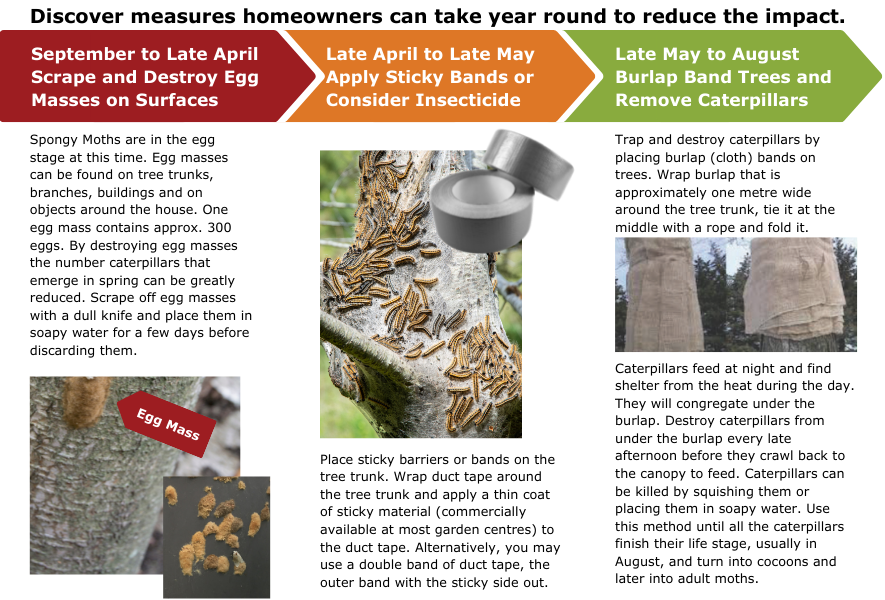
The best info on how to burlap band is found at this link https://fyi.extension.wisc.edu/gypsymothinwisconsin/making-a-burlap-barrier-band-trap/

Rolls of burlap can be found at local hardware stores, farm supply stores, garden centres, and big box stores.

Prices will vary based on store, quantity, brand, and size. Contact your preferred store for pricing and availability.

Home control methods can be found here.

Sticky Band

Info on how to make your own sticky band can be found at: https://fyi.extension.wisc.edu/gypsymothinwisconsin/making-a-sticky-barrier-band/

Information on Tangle Foot can be found at: https://www.tanglefoot.com/products/insect-control/tree-tanglefoot-insect-barrier

Sticky Band or Tangle Foot can be found at most farm supply stores, garden centres, or nursery’s 

Prices will vary based on store, quantity, brand, and size. Contact your preferred store for pricing and availability.

Private Spongy (LDD) Moth Spray Services Contractors

The following list is compiled of contractors who may provide moth spraying services on private residences for those not included in the Town of Pelham spray program.

Contractors that provide spray services may be added to the directory by contacting lddmoth@pelham.ca 

40 College Street 
Fonthill, ON. L0S 1E0
Phone:  905-327-4121

7838 Twenty Rd, 
Smithville, ON L0R 2A0
Phone: 1.888.721.8882

Email: info@arborwood.ca
Website: www.arborwood.ca

58 Timber Creek Crescent
Fonthill, ON L0S 1E4
Phone:  905-892-6579

Email:  info@betc.ca
Website: www.betc.ca

1354 Chippawa Creek Rd. Unit 3
Port Robinson, ON L0S1K0

Phone:  905-384-4125
Website: www.daveytree.ca/niagara

4685 Fountain St. N
Cambridge Ontario N3H 4R6
(CYKF) Airport

Cell: 519-580-4626
Office: 519-650-4542

*For rural or agricultural properties only 

2795 Moyer St,
Fenwick, ON L0S 1C0

Phone: (289) 650-1775
website: www.safetree.ca/site/home 

13130 McKenney Road, RR 1 
Welland, Ontario L3B 5N4

Phone:  905-384-0789
Website: https://www.ontariowoodlot.com/276-trees-unlimited

Past Spongy Moth Treatment in Pelham

May 6, 2025

Pelham, ON – The Town of Pelham is urging homeowners to take immediate preventative steps to continue to help protect the community’s tree canopy from the destructive impacts of the spongy moth (Lymantria dispar dispar), an invasive species currently spreading in the region.

Spongy moth caterpillars can cause severe defoliation of trees, weakening them and making them more vulnerable to disease and other pests. Homeowners can assist in limiting this damage by adopting simple, effective prevention methods that stop the caterpillars before they reach the treetops. One effective method is to wrap tree trunks with sticky band barriers in May. As young caterpillars climb toward the canopy, they can be intercepted by these sticky bands, significantly reducing their ability to feed on the tree’s foliage. Later in June, caterpillars descend during the day's heat to seek shelter. Homeowners are encouraged to tie folded burlap bands around tree trunks to trap the caterpillars as they gather underneath. Residents should inspect the bands daily, collect any caterpillars, and dispose of them in soapy water.

“Pelham has seen a noticeable reduction in spongy moth populations this year compared to previous seasons, which is a strong indication that the integrated approach — including public participation and targeted treatment — is working,” said Ryan Cook, Public Works Manager for the Town of Pelham. “The goal remains to protect Pelham’s tree canopy from invasive species and to preserve the health of the town’s urban forests.”

In addition to these homeowner actions, the Town will be conducting aerial spraying in Hillcrest Park, where a notable increase in spongy moth activity has been identified. The treatment will be carried out using a twin-engine aircraft between May 12 and June 15, with two applications planned approximately seven days apart, weather permitting. While residential properties are not directly treated, nearby residents may observe helicopter activity. Town staff will be present to manage traffic control during the spraying period. The confirmed spray schedule will be posted on the Town of Pelham’s website and Facebook page 48 hours before the applications.

The Davy Resource Group was retained by the Town of Pelham to conduct spongy moth egg mass surveys in the Town of Pelham throughout January 2024.

A total of 102 plots, including street trees and forest plots, were assessed throughout Pelham, including Fenwick and Fonthill. None of the 102 plots surveyed was found likely to experience heavy defoliation or to exceed the Invasive Species Action Threshold of 2500 egg masses per hectare.

Four plots were found likely to experience moderate defoliation, 20 plots may see light defoliation, and 78 plots are forecast to experience no detectible defoliation.

A large aerial spray program is not recommended in 2024, however, areas forecast for moderate to light defoliation may be investigated by staff for potential targeted ground spraying operations, limited to municipally owned property.

March 2023

Council received the staff report to address the periodic infestation of the Spongy Moth (Lymantria dispar dispar moth), previously known as the gypsy moth, experienced in the Town of Pelham. 

While the spongy moth population has declined significantly, there remains a potential for population growth. The continuance of annual monitoring programs for spongy moths and other invasive species is recommended as part of an ongoing operational program.

The Town of Pelham received the 2023 defoliation forecast map and a summary of findings that do not support the need for an aerial spray program in 2023.

Program Updates

May 31, 2022 - Second Spray Re-scheduled to take place June 2, 2022 

The second application of the 2022 aerial spray program for the Spongy Moth (LDD Moth) previously known as Gypsy Moth, has been re-scheduled for Thursday June 2, 2022 beginning at 7:00am due to weather. 

The application is highly influenced by weather conditions and the date and timing may change on short notice. The Town will take all reasonable steps to ensure that residents are kept informed. 

If the weather is not cooperative, the spray will not occur and the Town will update the dedicated Spongy Moth section of the website at www.pelham.ca/lddmoth and social media.

For more information about the Spongy Moth aerial spray program, including spray maps and frequently asked questions, visit: www.pelham.ca/lddmoth 

May 27, 2022 - Second Spray Scheduled for June 1, 2022 

The Town of Pelham has confirmed that the second aerial application of BTK for the control of the Spongy Moth (LDD) will commence on Wednesday, June 1, 2022 between 7:00am and 9:00am, weather permitting.

The application is highly influenced by weather conditions so the date and timing may change on short notice. We will take all reasonable steps to ensure that we keep you up to date.

The spray is completed by Zimmer Air with a twin-engine helicopter; residents can expect high audible levels as the helicopter completes its path.

Members of the public are unlikely to experience any health effects, and no special precautions are necessary or required. Individuals who have concerns should take reasonable precautions to avoid exposure during an application period of the program.

While no special precautions need to be taken, the following measures may be considered by residents living in treatment areas:

  • Whenever possible, remain indoors for 30 minutes after spraying to allow for the droplets to deposit onto the tree leaves.
  • Bringing laundry, toys and pets indoors before spraying begins.
  • Practice good personal and food hygiene (e.g., hand washing after outdoor activities, especially after gardening; leaving outdoor shoes at the door; washing all fruits and vegetables before eating or cooking).
  • Covering lawn furniture, outdoor tables, pools, BBQs, play equipment and sandboxes and/or rinsing them off with water after spraying is finished.
  • Minimize opening and closing windows and doors during the spraying.
  • Shutting off the heating/cooling vents or selecting the recirculate setting.
  • Contacting your family physician if you are concerned that a personal medical condition may be aggravated by the spraying.

View spray maps and frequently asked questions.

May 19, 2022 - First Spray Scheduled for May 24, 2022 

The Town of Pelham has confirmed that the first aerial application of BTK for the control of the Spongy Moth (LDD) will commence on Tuesday, May 24, 2022 between 6:30am and 8:30am, weather permitting.

The application is highly influenced by weather conditions so the date and timing may change on short notice. We will take all reasonable steps to ensure that we keep you up to date.

Weather Permitting, a second aerial spray application will occur within 7 days of the first. 

The spray is completed by Zimmer Air with a twin-engine helicopter; residents can expect high audible levels as the helicopter completes its path.

Members of the public are unlikely to experience any health effects, and no special precautions are necessary or required. Individuals who have concerns should take reasonable precautions to avoid exposure during an application period of the program.

While no special precautions need to be taken, the following measures may be considered by residents living in treatment areas:

  • Whenever possible, remain indoors for 30 minutes after spraying to allow for the droplets to deposit onto the tree leaves.
  • Bringing laundry, toys and pets indoors before spraying begins.
  • Practice good personal and food hygiene (e.g., hand washing after outdoor activities, especially after gardening; leaving outdoor shoes at the door; washing all fruits and vegetables before eating or cooking).
  • Covering lawn furniture, outdoor tables, pools, BBQs, play equipment and sandboxes and/or rinsing them off with water after spraying is finished.
  • Minimize opening and closing windows and doors during the spraying.
  • Shutting off the heating/cooling vents or selecting the recirculate setting.
  • Contacting your family physician if you are concerned that a personal medical condition may be aggravated by the spraying.

View spray maps and frequently asked questions.

April 6, 2022

The Town of Pelham Public Works department issued addressed letters to all homeowners in the designated spray blocks areas to advise of the upcoming Spongy Moth (LDD) spray program. 

Area 1: Canboro Road near Oakridge Boulevard

Area 2: Cream Street near North Pelham Park

Area 3: Effingham and Metler Road

Area 4: Foss Road near Balfour Street

Area 5: Effingham, Pancake Lane & Welland Road

Area 6: Balfour Street near Sumbler Road

Area 7: Tice Road, Moore Drive

Area 8: Welland Road at Centre Street

In addition, those residents in the buffer areas surrounding the spray blocks were also notified of the upcoming spray program.

The Wednesday April 6 edition of the Voice of Pelham also contained a Spongy Moth information insert that included maps of all spray block areas. 

April 4, 2022 

Town of Pelham 2022 Aerial Spray Program

The Town of Pelham's LDD moth aerial spray program will commence as early as May 10th with final spray dates posted on the Town of Pelham website at www.pelham.ca/LDDMoth within 48 hours prior to the application.

The maps identify the spray blocks to receive treatment from the aerial spray program. The spray blocks identified have been designed to have the greatest impact on preventing defoliation and protecting the health of the most vulnerable trees in accordance with the Town of Pelham LDD Moth Management Policy and Integrated Pest Management strategy.

For residents that have property outside of the spray areas a list of private spray contractors has been developed.

Public Notice of Pesticide Use Town of Pelham LDD Moth Control

The Town of Pelham is conducting an aerial spray program to control LDD moth (Lymantria dispar dispar) along the following municipal roadsides/parks, Town-owned properties, and privately owned properties:

Area 1: Canboro Road near Oakridge Boulevard

Area 2: Cream Street near North Pelham Park

Area 3: Effingham and Metler Road

Area 4: Foss Road near Balfour Street

Area 5: Effingham, Pancake Lane & Welland Road

Area 6: Balfour Street near Sumbler Road

Area 7: Tice Road, Moore Drive

Area 8: Welland Road at Centre Street

All areas are within the Town of Pelham.

The aerial spray program carried out by helicopter will be applying the biological pesticide Foray 48B Biological Insecticide Aqueous Suspension, the active ingredient is Bacillus thuringiensis v. kurstaki (Btk), Registration No. 24977 under the Pest Control Products Act (Canada).

Applications will occur early mornings before 8:00 a.m. Approximately seven days apart, two applications will occur. Proposed earliest commencement date of May 10, 2022, and ending June 15, 2022.

For more information, contact Sonia Simoes, Administrative Assistant to Public Works, Town of Pelham, 905-980-6672 Collect calls will be accepted.

Spray dates will be released on the Town of Pelham website and social media channels 48 hours prior to application.

Maps of each spray area are available by emailing lddmoth@pelham.ca  or visiting www.pelham.ca/LDDMoth 

March 30, 2022

The cubs from the local scouting group, 3rd Fonthill Scouting had guest speaker Ryan Cook, the Town of Pelham Manager of Public Works join a meeting to share information about the invasive species the Spongy Moth (LDD/Gypsy).

Mr. Cook spoke about invasive species, how the moths came to the area, what damage they can do to the tree canopy and how burlap banding can help make an impact. He also did a demonstration on how to apply burlap banding to tree trunks to reduce the number of caterpillars that infest the tree canopy.
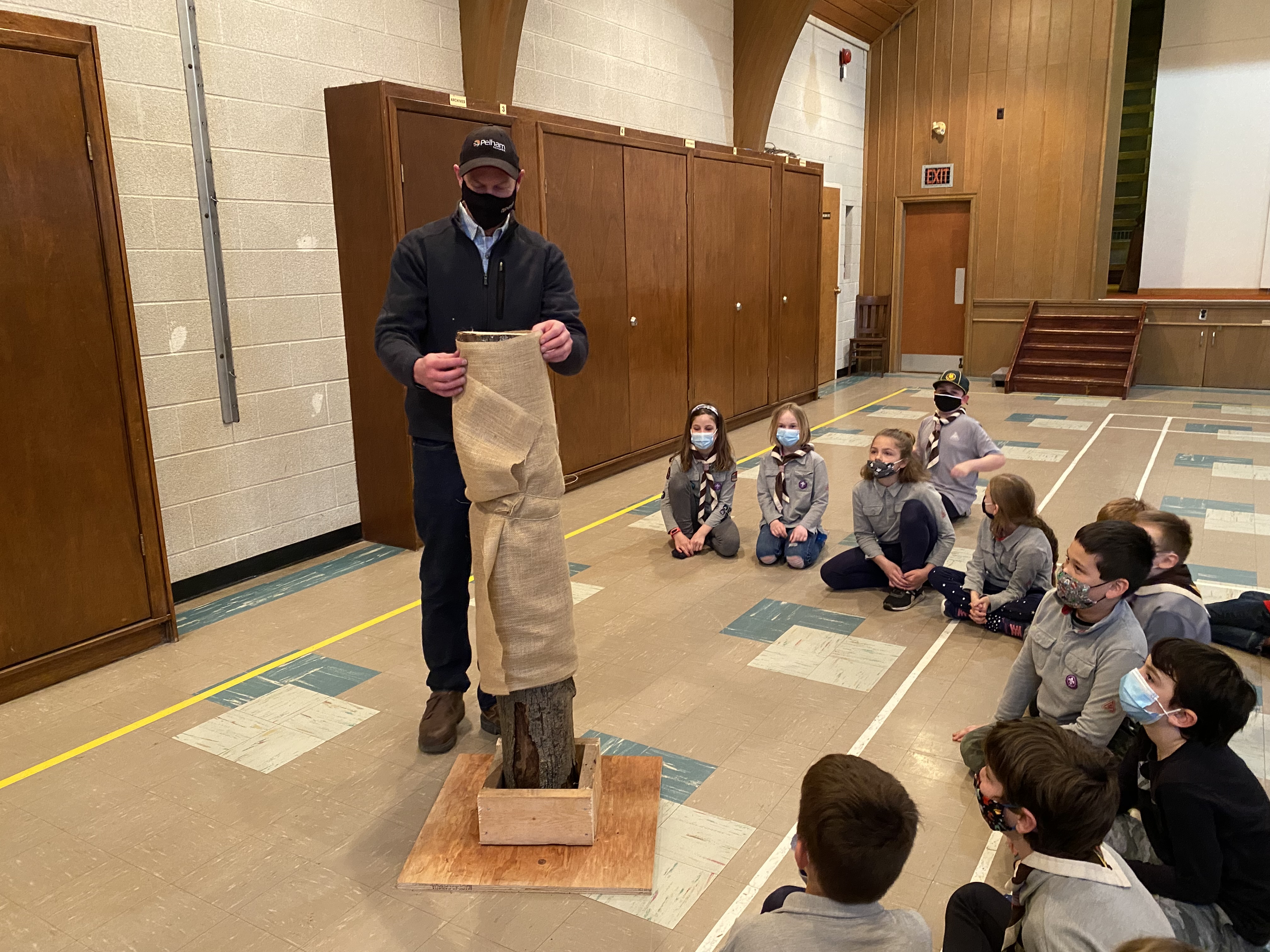
learning about banding

The Cubs then practised applying the banding, showing Mr. Cook some of their knot tying skills, and managed to compete against for the fastest application of the burlap banding – the best time was under 30 seconds to apply.

The Cubs ages 8-11, then worked with the volunteer scouters to assemble supplies provided by the Town to create 100 Spongy Moth banding kits that will be distributed to homeowners in Pelham. Homeowners will be able to pick up a kit from the Town of Pelham booth at the Kinsmen Home show, free of charge, while supplies last.
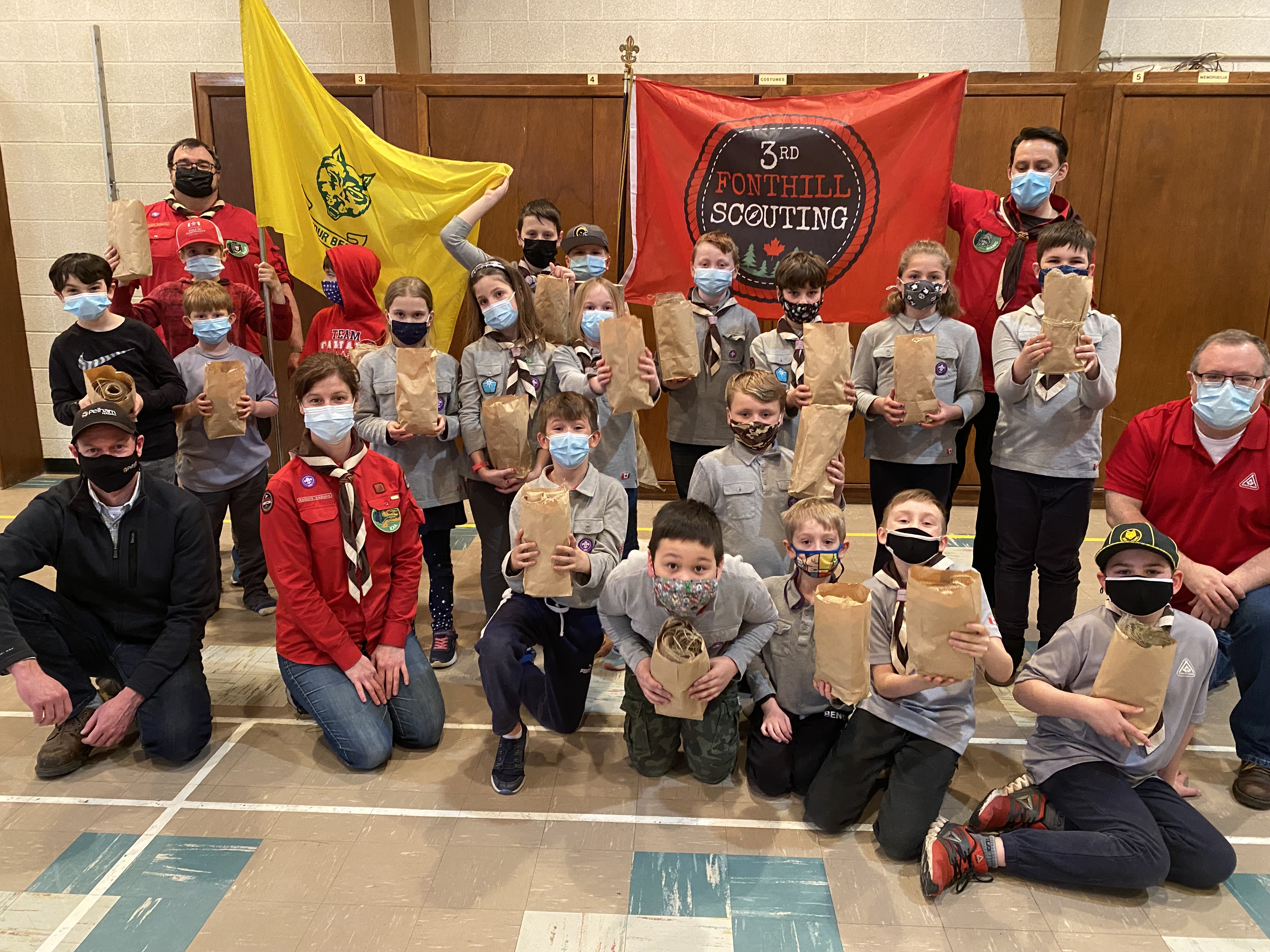
Scouts with Banding kits

March 7, 2022

At the March 7, 2022 meeting, Council approved the recommendation to move forward with a Spongy Moth spray program utilizing approved budget and spray blocks identified for a total area of approximately 108 Hectares. 

Lallemand Inc. /Bioforest (BioForest) worked in conjunction with staff to develop aerial spray blocks to fit within the available spray budget. Consideration was given to Policy S802-03, as well as the 2022 defoliation forecast, and a number of other criteria. View the policy

Council has approved the recommendation to move forward with a Spongy Moth spray program utilizing approved budget for the 2022 program and spray blocks identified for a total area of approximately 108 Hectares.  

Area 1: Canboro Road near Oakridge Boulevard

Area 2: Cream Street near North Pelham Park

Area 3: Effingham and Metler Road

Area 4: Foss Road near Balfour Street

Area 5: Effingham, Pancake Lane & Welland Road

Area 6: Balfour Street near Sumbler Road

Area 7: Tice Road, Moore Drive

Area 8: Welland Road at Centre Street


View the report here.

February 7, 2022

At the February 7, 2022, council meeting, Council received Public Works Report 2022-0028 outlining the results of the LDD Moth egg mass surveys, management recommendations, and associated costs.

The report serves to fulfill the requirements of Policy S802-03 to inform Council of the proposed spray blocks, and present the by-law amendment required to implement an aerial spray program using the biologic control agent Bacillus thuringiensis subspecies kurstaki (Btk) in and around public trees and trees on private lands within the Town of Pelham.

The 2021 LDD moth Monitoring Program Report, was prepared by BioForest.

The report provides evidence that Pelham’s LDD moth population may have passed its peak and is on the decline, the Town has the potential to experience heavy to severe levels of defoliation.

The most severe defoliation is anticipated to occur north of Fonthill (Effingham Street, Tice Road, and Metler Road area), in the area between Fenwick and Fonthill just outside the Fonthill urban boundary (along Effingham Street, Welland Road, Canboro Road and Pancake Lane), and south of Fenwick (Balfour Street south of Sumbler Road and along Cream Street south of Foss Road).

Defoliation within the urban boundaries of Fenwick and Fonthill is expected to be predominantly light to moderate, with the exception of a few areas located near the urban/rural border.

Sign up to receive Town of Pelham news and alerts

Stay up to date on the Town's activities, events, programs and operations by subscribing to our eNewsletters.